
By Team @ Mahendra Bhavsar & Co.
Reviewed by: Mahendra Bhavsar & Co. Legal Team
Last Updated: 10 June 2026
Quick Answer
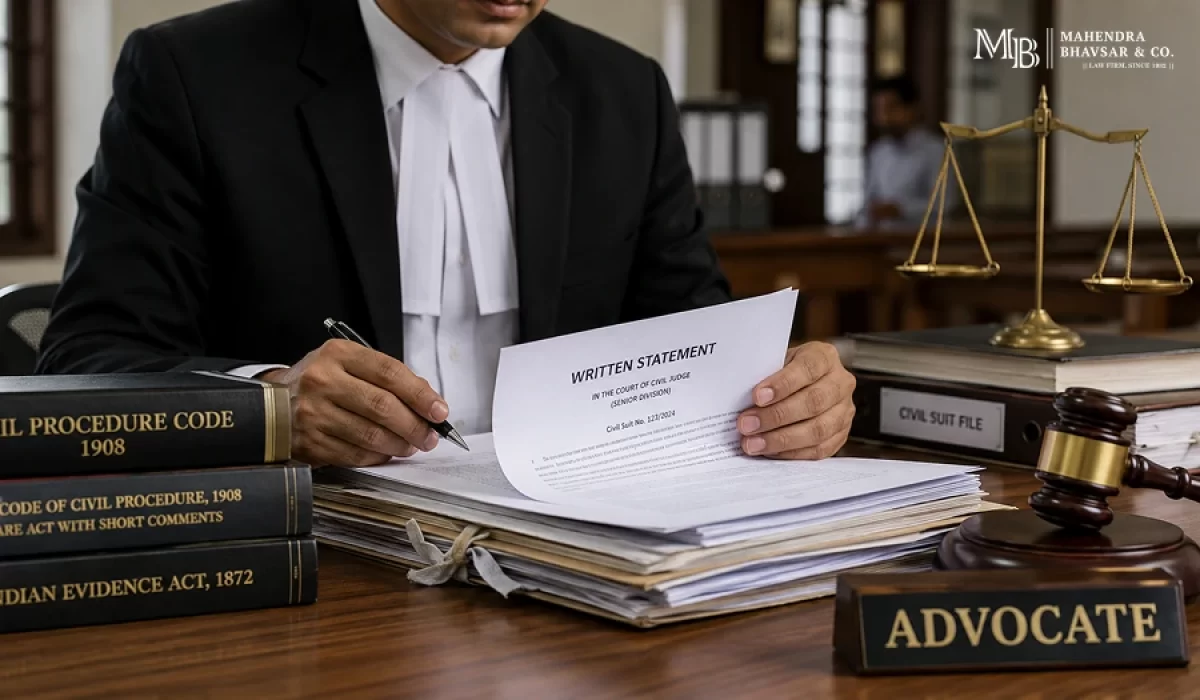
In Mondira Ghosh v. Chaitali Ghosh, decided on 26 May 2026, the Supreme Court considered whether a defendant could file an additional written statement after commencement of trial and take a position completely inconsistent with the defence originally pleaded. The Court held that such a course was impermissible in the facts of the case. It found that the defendant was attempting to replace an earlier stand with a contradictory one and use procedural provisions to overcome restrictions that would otherwise apply to amendment of pleadings.
Why This Judgment Matters
Civil litigation often turns on pleadings. Courts frame issues and conduct trials based on the claims and defences presented by the parties. If parties are permitted to fundamentally alter their positions after trial has progressed, the fairness and efficiency of proceedings may be seriously affected.
This judgment is important because it clarifies the limits of filing an additional written statement under the Code of Civil Procedure. The decision emphasises that such pleadings cannot be used as a device to introduce a completely contradictory case after substantial progress has been made in the trial.
The ruling is relevant for litigants, businesses, lawyers and law students involved in civil disputes. It highlights the importance of adopting a clear and consistent litigation strategy from the outset and reinforces the role of procedural safeguards in ensuring orderly adjudication.
Brief Facts
The plaintiff filed a suit seeking a declaration that the defendant was in unlawful possession of the suit premises and sought eviction, damages and costs. In her original written statement, the defendant claimed that she was a bona fide co-sharer in the property and denied the plaintiff’s claims.
Issues were framed and the trial commenced. The plaintiff’s witness was examined and extensively cross-examined over multiple hearings. After the trial had already progressed, the defendant filed an application under Order 8 Rule 9 of the Code of Civil Procedure seeking permission to file an additional written statement together with a counterclaim.
The Trial Court rejected the application. It noted that the defendant had originally asserted co-sharer status but now sought to claim that she was a tenant under the plaintiff. The Trial Court considered this to be a completely inconsistent position and dismissed the application.
The High Court partly reversed that decision by permitting the additional written statement, though it declined to allow the counterclaim. The plaintiff then approached the Supreme Court.
Key Legal Issue
The Supreme Court considered the following questions:
1. Can a defendant file an additional written statement after commencement of trial to introduce a completely inconsistent defence?
2. Can procedural provisions relating to additional written statements be used to overcome restrictions that would otherwise apply to amendment of pleadings?
3. Whether the High Court was justified in permitting the additional written statement in the facts of the case?
What the Court Held
Additional Written Statements Have Limited Scope
The Court examined Order 8 Rule 9 of the CPC and observed that additional pleadings are not ordinarily contemplated after a written statement has already been filed. The provision allows such pleadings only in limited circumstances and when required by the Court.
Contradictory Defence Was Not Permissible
The Supreme Court emphasised that this was not a case where the defendant had merely omitted certain facts from the original written statement. Instead, the defendant sought to completely alter her position.
Originally, she claimed to be a bona fide co-sharer of the property. Through the proposed additional written statement, she sought to assert that she was a tenant under the plaintiff. The Court regarded this as a complete retraction of the earlier defence and the introduction of a contradictory case.
Procedural Rules Cannot Be Circumvented
The Court noted that the trial had already commenced and substantial proceedings had taken place. It observed that the attempt to file the additional written statement appeared designed to avoid the restrictions that would have applied had the defendant sought amendment of her pleadings at that stage.
According to the Court, such use of procedural provisions amounted to an abuse of process. The Trial Court was therefore justified in rejecting the application.
High Court Order Set Aside
The Supreme Court concluded that the High Court erred in allowing the additional written statement. It restored the Trial Court’s order rejecting the defendant’s application.
Practical Takeaways
- Parties should adopt a clear and consistent defence at the outset of litigation.
- Additional written statements cannot automatically be used to introduce contradictory claims.
- Courts may closely scrutinise attempts to alter positions after trial has commenced.
- Procedural provisions should not be used to bypass restrictions applicable to amendments.
- Litigation strategy should be carefully considered before pleadings are filed.
What the Judgment Does Not Decide
- The final merits of the underlying property dispute.
- Whether the plaintiff’s substantive claims ultimately succeed.
- The legality of every additional written statement filed in civil proceedings.
- Questions unrelated to the procedural issue before the Court.
- Any broader rights of tenancy or co-ownership beyond the facts of the case.
Short Ratio
A defendant cannot use an additional written statement under Order 8 Rule 9 CPC to completely retract an earlier defence and introduce a contradictory case after commencement of trial. Procedural provisions cannot be employed to circumvent restrictions that would otherwise govern amendment of pleadings.
FAQs:
1. What was the main issue before the Supreme Court?
The principal issue was whether a defendant could file an additional written statement after commencement of trial and replace an earlier defence with a completely contradictory position regarding her status in relation to the property.
2. What contradictory positions were involved in the case?
According to the judgment, the defendant initially claimed to be a bona fide co-sharer of the property. Later, through the proposed additional written statement, she sought to claim that she was a tenant under the plaintiff.
3. Why did the Supreme Court reject the additional written statement?
The Court held that the defendant was not merely adding omitted facts but was attempting a complete change of stand. It considered this inconsistent with the procedural framework governing pleadings.
4. Did the Supreme Court allow the proposed counterclaim?
No. The High Court had already declined to permit the counterclaim. The Supreme Court’s decision focused on the additional written statement and ultimately restored the Trial Court’s order rejecting it.
5. Why is this judgment important for litigants?
The decision highlights that pleadings form the foundation of civil litigation and that courts may not permit parties to fundamentally alter their case after trial has progressed significantly.
Stay informed with insights that matter. Follow us for more updates on key legal developments.
Disclaimer
The content provided here is for general information only; it does not constitute legal advice. Reading them does not create a lawyer-client relationship, and Mahendra Bhavsar & Co. disclaims all liability for actions taken or omitted based on this content. Always obtain advice from qualified counsel for your specific circumstances. © Mahendra Bhavsar & Co.